


It was a Saturday, and I was working on replacing all the interior doors in my house. Home projects were something I really looked forward to and found great joy in. Something about making a place better than it was when I moved in just brought peace to my anxious mind.
My phone rang, and I saw it was my brother calling. When a member of my family calls me, my stomach always drops and I prepare subconsciously for bad news. We are not the family that calls each other just to talk. Almost always, there is an agenda or a piece of bad information to deliver.
“Dad had a heart attack, and they are taking him to the hospital,” my brother said.
I knew this was the day my dad was going to die.
I asked my brother if he was conscious or if they had just revived him. He told me they had already been forced to revive him twice. I calmly sat down in a chair in my bedroom and prepared for what was most likely to happen, while my older brother was frantic and rushing to the hospital to see him. I tried to call the hospital to get information on his condition to see if I should also drive forty-five minutes to see him. But from what I knew about multiple heart attacks, the chances of surviving were very unlikely.
So I kept working on my doors, and cried. Not sobbing, not deeply, just a tear or two every so often. In many ways, I had been preparing for this phone call for the past few months since the last visit with my father. This was one of the hardest things about his death. Because I had been somewhat subconsciously preparing for it, I wasn’t able to truly grieve him.
My protector was already operating behind the scenes since that last visit to protect and prepare me. However, protecting me didn’t always mean doing what was best for me. Anger and suppression were some of his best methods at preventing me from feeling the gravity and weight of a situation. The month before my dad died, I was driving home and feeling a deep anger that I couldn’t put my finger on. It had begun to bleed into my relationship with Mary and my daughter. I would snap about the littlest things and struggle to understand why I was so angry. My emotions felt like such a mystery to me. So, almost a month before my dad died, I called to schedule an appointment for therapy for the first time. I was put on a waitlist and would start in a couple of months.
I was actually all alone when I got the call about my father. Mary had gone to the city with our daughter to hang out with her family. I was thankful for that because I got to process his death by myself, and I felt no pressure to look a certain way. I let Mary know, and when she asked me if I wanted her to come home, I told her no and to just have fun with her sister.
Later that night, we did our normal nightly routine. We would make a snack and watch a show after getting our daughter down. This time we were going to watch a movie. We usually took turns picking what type of movie we watched, but Mary didn’t want to watch any of the movies I was picking. I remember being very aggressive with her and reacting very irrationally. I said something to the effect of, “Are you kidding me? Let me pick the movie, my dad just died!”
She apologized and said, “Sorry, you just seemed like it wasn’t affecting you at all. I didn’t know.” In that moment, I realized how good I had become at suppressing deep emotions and pain, and I knew grieving him was going to be complicated.
We were at a different church at this point in time. We ended up being in four different churches over the course of our time in Stillwater. Without asking me, the pastor decided to come to my father’s funeral in my hometown. I didn’t want him to come. I didn’t have a great relationship with the pastor of this church, but it was a smaller church and we had other friends that we really loved who went to this church, so we stuck with it.
My father’s funeral was one of the most awkward things I’ve ever been to. My grandma had it at her church, and the pastor clearly had never met my father. She gave a mini-sermon about God and then asked the crowd if they had anything good that they wanted to say about my father, and no one stood up to say anything. Then there was a slideshow of my father that didn’t include any photos of us, just photos of the last few years. Ultimately, it felt like I was at a funeral of a random person that I didn’t know.
We got home, and my pastor decided to come over to my house to talk. I didn’t invite him. Really, I was quite annoyed he was there, but I knew he was trying to be kind and do the pastorly thing, so I didn’t tell him to not come. He ended up overstaying his welcome, inferring that my father was in hell, and talking way too long about the bad relationship he had with his own father.
I quietly raged inside. How dare he act like he knew where my father was. He didn’t know God’s mind, or the state of my father’s soul, or what my father’s inner spiritual life looked like. My father didn’t hate God, and every time we talked about spiritual things, he was always interested and willing to listen. He didn’t go to church or read the Bible, but he was never opposed to my religiousness or Jesus. In fact, he told me how much he liked Him. I remember thinking that if God is merciful and forgiving, He could forgive my father and choose not to send him to hell. He would know all of my dad’s struggles and failures, and He would know his heart.
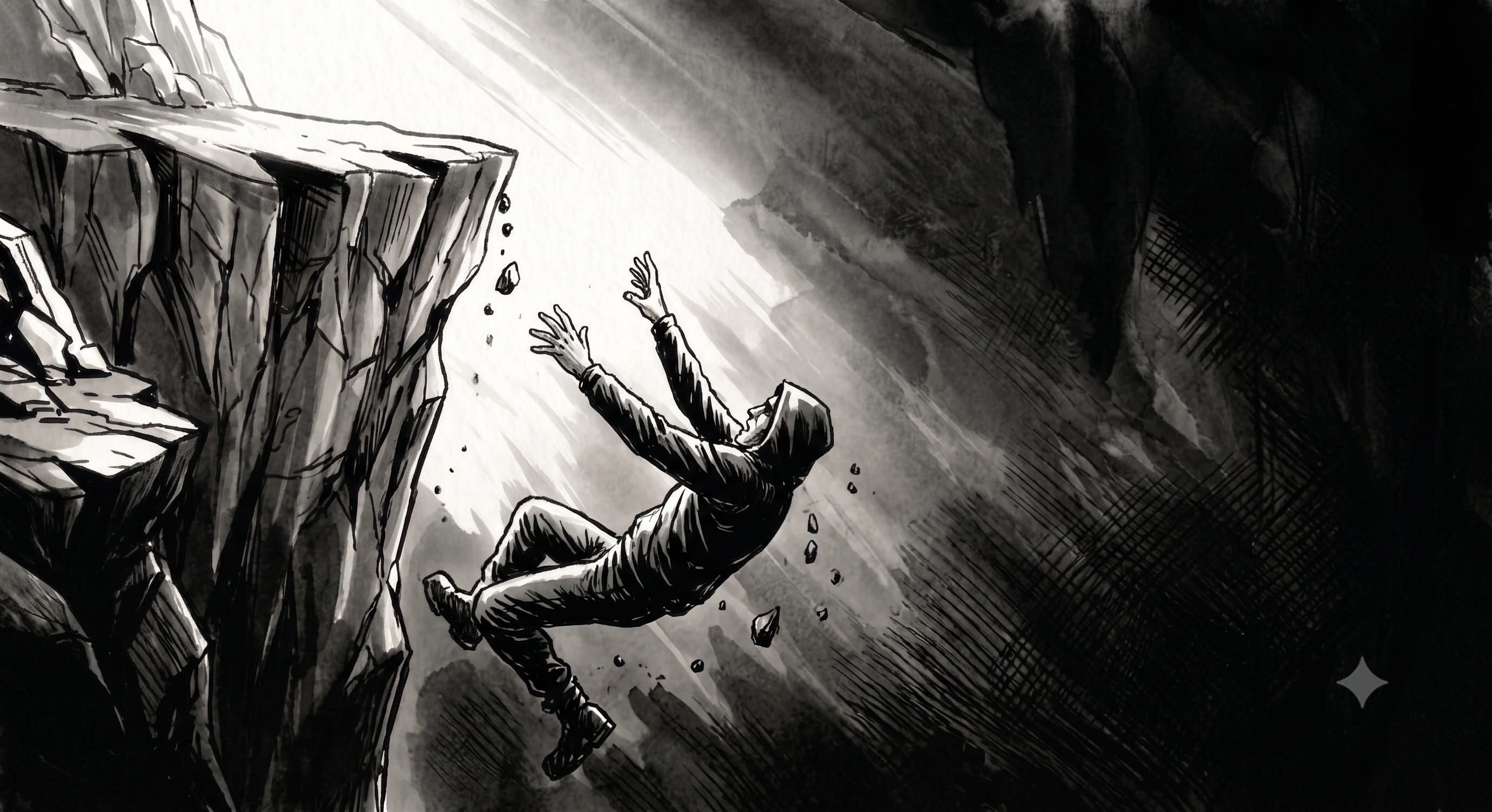
The thing I couldn’t shake, though, was the thought of how my dad died. I had talked to my grandma at the funeral and asked her about that day. She told me that he had been staying in the room I had stayed in when I lived with her in high school. He had shouted for help, stumbled into the hallway, and collapsed. My grandma, who had been a paramedic when she was younger, immediately began CPR.
I couldn’t help but replay that event over and over in my mind. I entered my father’s mind and embodied his fear. I imagined what it would be like to be a 57-year-old man living at home with your mother, absent from your family, and then to have your heart stop beating and know something is deeply wrong. To scream out for help and to make it out of the room. To know that you are in serious trouble and to think, This might be where I die. What rushed to his mind? Regret? Anger? Fear? It all felt like too much, and I would have to stop thinking about it or it would consume me.
I remember googling how to grieve a father who was absent, and I couldn’t find any good resources or help on it. There were people who wrote about how they were glad their parent had died because they abused them, and then people who were grieving because they had lost a parent that was great. But how do you grieve a father who you deeply loved and was a good father when present, but was absent because of his own childhood demons? No one had wisdom on this.
So I felt stuck. I was glad that I already had counseling set up, but it was still almost a month away. I didn’t know how or if it would help. I was skeptical about it. I hated the idea of processing “how I felt.” I thought, How could talking about my emotions make any difference? Once again, I realize the irony of the fact that I married a therapist. But subconsciously, I felt above all of that. That is for people who are emotional, not logical. If they were smart, they’d know that emotions lie and you can’t trust them. If they knew the truth about God that I did, that was all they needed. They didn’t need to process their feelings; they needed to pledge allegiance to the truth of the Gospel. That is where real power for change comes from.
But here I was, angry and unable to grieve the loss of my father. I had the truth, but I wasn’t feeling better, and I wasn’t able to control my anger.
And even worse, a realization began to surface. I had lost a deeply held subconscious belief that I had carried since the day I hugged my father at the gas station after church camp all those years ago. Maybe this story and this message of Jesus would be powerful enough to change my father. Maybe if he could understand it, he could change his life, like I did, and be the present and loving father that I knew he could be. Maybe with this message, I would finally have my earthly father.
But what was painfully clear to me, even more than his physical death, was the death of the hope of his reconciliation.
Continue the story below…
10. An Emotional Shockwave

This is one year after the loss of my father, the summer of 2019. We had two biological girls and opened our house up to foster care shortly after our second child was born. We did it thinking it would take at least six months before we got a placement, but within a month, our phone rang while we were at dinner with friends. They had a three-day-old bab…