



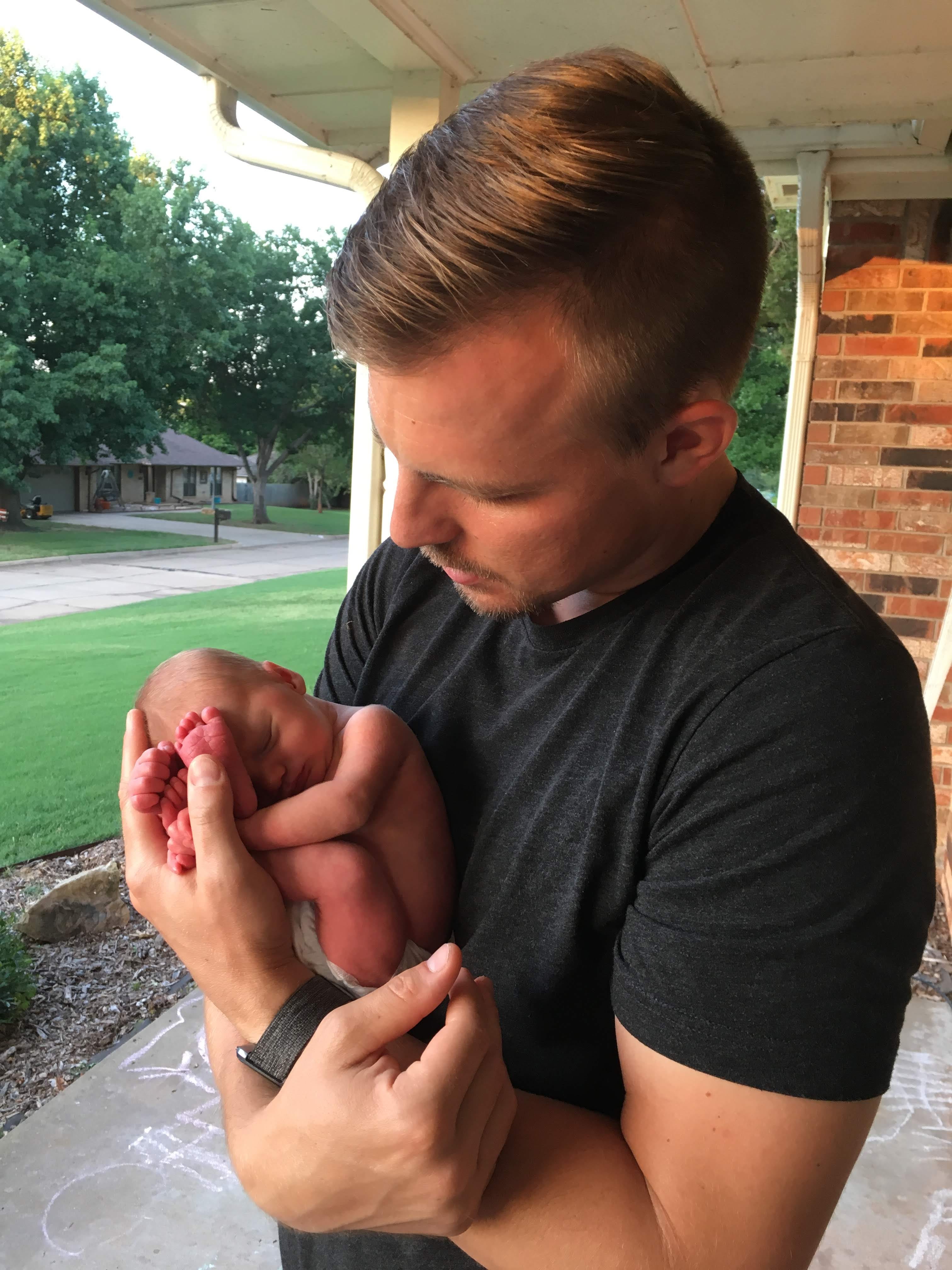
This is one year after the loss of my father, the summer of 2019. We had two biological girls and opened our house up to foster care shortly after our second child was born. We did it thinking it would take at least six months before we got a placement, but within a month, our phone rang while we were at dinner with friends. They had a three-day-old baby girl that needed immediate placement and asked us if we could come and pick her up.
The whole process was surreal. You show up to the DHS office and a baby is there just waiting to go home to a random family after being ripped away from her biological mother. She was premature and barely over five pounds. I could hold her with one hand. We signed the paperwork and took her home with us. Mary had nursed our other two children and we had never used formula, so we had no clue what to do. Even more than that, she was born at thirty-four weeks so we were frantically googling how to care for a premature baby. We had to wake her up throughout the night to make sure she kept eating to take in enough calories to keep growing.
It was an incredibly challenging time in our life. This was our first placement. She was a brand new baby and even though we had already parented two kids, this was different. We were tasked with caring for and loving a child that we didn’t know how long would be with us and what the future of her life would look like. We didn’t know if the impact we would make would matter or last in the course of her life, or if she would ever even know who we were. We poured our hearts out and didn’t know if there would be any return of love.
A Primal Rage
It was early in the morning during this season and I was changing the diaper of my foster daughter. She was crying like babies tend to do when you are changing them. I felt an intense sense of anger come over me. Children crying can drive any normal person crazy, but this rage was deep and primal. I couldn’t understand what was going on. I had no reason to feel this level of rage about a diaper change, and I didn’t feel it with my other two daughters. This was different, and I couldn’t understand why and it scared me. Thankfully, I had been in therapy since the loss of my father and was beginning to have language and an understanding of what was happening to me behind my conscious mind. I started to understand the thinking that was happening subconsciously.
I was angry. Angry at her. Angry at God.
Why does this little girl get to get rescued from her terrible childhood and get to come live with parents that intentionally chose to open up their homes and pursue her? Why didn’t God send someone to rescue me? Was I not worthy of being rescued? Was I not worthy of pursuit?
The Pain of Emotional Revelation
Therapy had been incredibly challenging for me. When I first went in to process the loss of my father, I wasn’t emotional. The therapy model I sought was CBT because it seemed to make the most sense and be the most logical. I would cognitively talk about my life, make sense of it, and get my actions under control by cognitively controlling my emotions. At least that is what I thought. I never lost emotional composure in my CBT sessions, with the exception of one that I remember vividly.
I was processing an event that had happened at my work. A mother was in the office with her son helping him fill out an application for an apartment. I watched their interaction and felt a deep frustration about how he was talking to his mother who was trying to help him, and I couldn’t pinpoint why. As I told my therapist about this interaction and the anger I was feeling and my lack of understanding, he asked a question that broke my defenses. His question was simply, what does that mean about how you feel about your mother? I started sobbing and said, I never got help from her and I hated how disrespectful this kid was to his mother.
Now I don’t want this therapy example to come across like my father was the good guy and my mother was bad. But what I began to realize after that therapy session was that both of my parents had their own flaws. My mother, while she had never really left me, she was never capable of leading and guiding me. She was physically present, but not emotionally mature or capable of truly leading us. This wasn’t due to anything malicious on her part, but rather her own lack of guidance in her own life and the limited amount of resources she had.
Emotions Are Not a Bug
I had unlocked something I didn’t realize up until this point in my life. Under my deep anger and aggression was a deeper emotion that was trying to be expressed, but my protector had always jumped in to suppress it and protect me from feeling the full weight of it. I realized that running a human system on logic only and suppressing all emotions with the tyrant emotion of anger wasn’t actually healthy and couldn’t deal with the complexity of life. Anger was secondary and always signaling a deeper emotion under the surface.
I had been in therapy now for two years, I had actually switched into a few different forms to deal with the complexity of my trauma (EFT, EMDR and DBT), and I was really beginning to understand the need for emotional expression and sitting and tapping into what I was feeling to prevent aggressive outbursts. I was also listening to a therapy podcast that was talking about the research around how our thinking actually changes our brain structures and how our childhood trauma actually rewires our brains as children. More importantly though was the research that showed how trauma victims could do therapy and actually change their brains as adults.
I was shocked. My prior thinking was woefully inadequate. The irony is that I used to think, what would talking help? It wouldn’t change the past. Little did I realize that the past had changed me biologically, and that by processing my emotions, I could actually work to undo the biological damage that happened to my brain structures.
The Insufficiency of a Systematic Theology
I was doing so much better in relation to feeling my emotions and processing my trauma around my childhood for the first time in my life. But as I began to understand what it means to be an emotionally healthy and expressive person who is honest with what they are feeling and speaks about their emotional needs, I realized how lacking this message was in church. I had heard hundreds of sermons, read many Christian books, and been to countless men’s conferences, but I hadn’t heard about any of these things I was learning in my therapy sessions.
The thought crossed my mind and I couldn’t shake it. How could the last two years of therapy have changed how I relate to my wife, my children, and the world around me more than fifteen years in a rigid theology? How do I make sense of this?
The seismic shift had begun. The foundation of my theological wall was no longer stable.
Continue the story below…
11. A Cleansing Flood

It was a Thursday night and my living room was crowded with fold out chairs. Our small group was going verse by verse through Genesis, and we had arrived at the story of Noah. This was the first time I had ever had a leader go line by line through this ancient text.